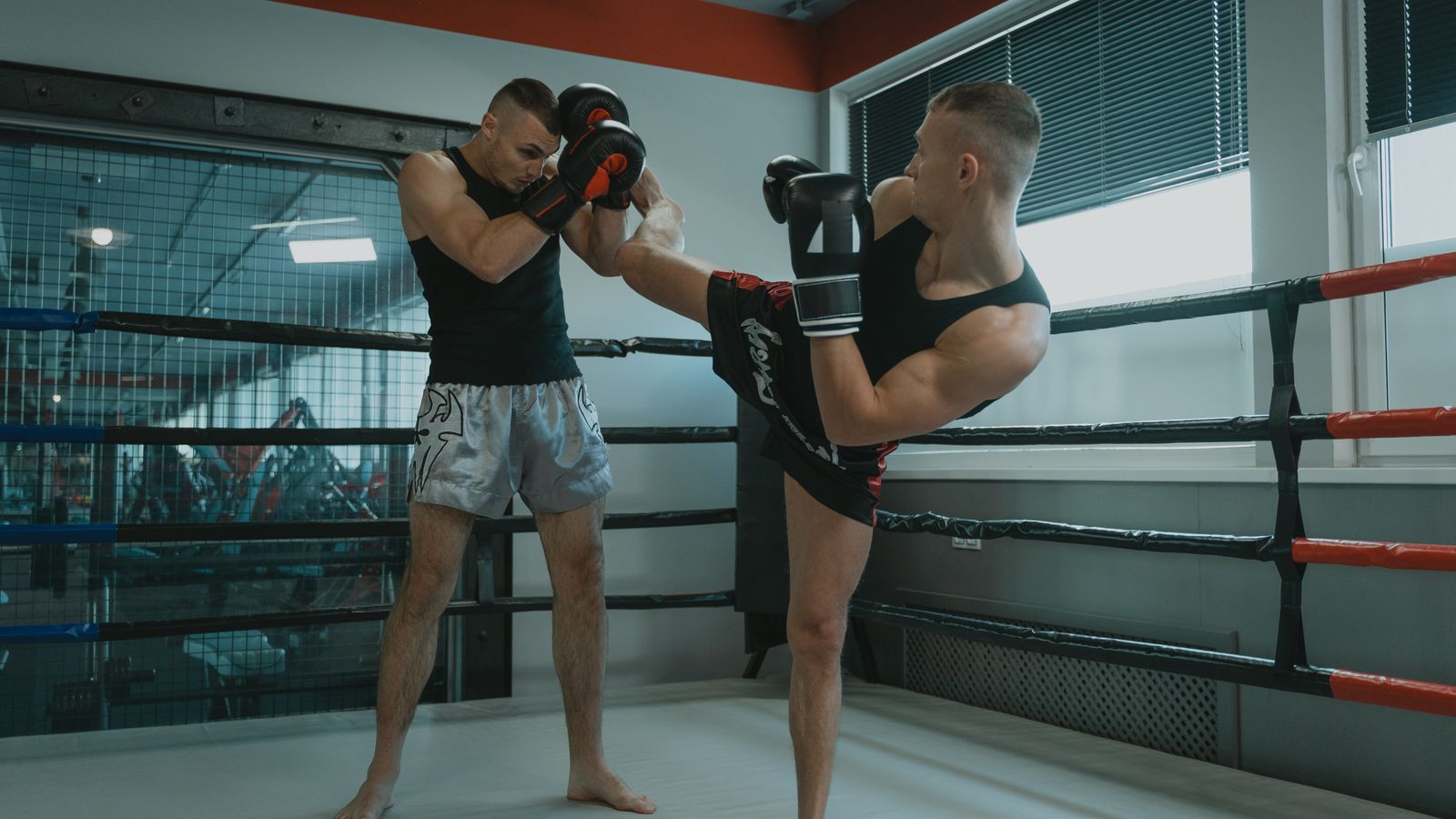
Yes, cross training BJJ or boxing alongside Muay Thai works, and a lot of it carries over directly. But not all of it does, and pretending otherwise is how people end up with sharp hands and weak legs, or a good guard and no clinch game at all.
This question comes up a lot more than it used to. When a well known BJJ champion made public comments comparing BJJ and Muay Thai, it sparked a genuine debate online, and a lot of hobbyists started asking the same thing: should I be doing both? At Khao Noi Gym in Singapore we get versions of this question from members every month, usually from people who started with one discipline and got curious about the other, or from people already doing BJJ or boxing elsewhere who want to add Muay Thai on top.
Does boxing help with Muay Thai
Yes, more than almost anything else you could cross train. Boxing sharpens exactly the tools Muay Thai already uses in the boxing range, since both sports share a striking base with hands and head movement.
- Hand speed and combinations transfer straight across, since Muay Thai punches use the same mechanics as boxing punches
- Head movement and slipping, which boxing drills relentlessly, is something a lot of Muay Thai gyms spend less time on
- Footwork for closing distance and cutting angles applies directly, since both sports use a similar boxing stance as the base
- Counter-punching instincts sharpen up fast when you have boxing rounds under your belt
- Ring generalship, meaning the sense of managing distance and cutting off space, translates well into the Muay Thai ring too
Does BJJ help with Muay Thai
Yes, but in a different way than most people expect. BJJ does not teach you to strike. What it teaches is balance, base, and being comfortable when you are off balance or being controlled, and all three of those show up directly in the Muay Thai clinch.
- Base and posture from BJJ make it much harder for someone to off-balance you in the clinch
- Scrambling ability, the instinct to keep working instead of freezing when a position gets bad, transfers well into clinch exchanges
- Being used to close contact and grips means the clinch feels a lot less foreign on day one than it does to a total beginner
- Timing for off-balancing an opponent, which BJJ practitioners already understand from sweeps, applies almost directly to Muay Thai's clinch off-balancing
- Comfort with fatigue while still being controlled by someone bigger is a mental skill BJJ builds early, and it helps a lot in a long, grinding clinch exchange
What does not transfer at all
This is the part that gets skipped in most "cross train everything" advice online, and it is the most important part to be honest about.
Muay Thai's kicking and knee range has no real equivalent in boxing or BJJ. Neither sport asks you to check a kick, throw a teep, time a knee in the clinch, or read distance in a kicking exchange. This is not a small gap. Kicks and knees are a huge part of what makes Muay Thai Muay Thai, and cross training in boxing or BJJ does nothing to build them.
If your plan is to cross train and assume your kicks will develop as a side effect of doing other combat sports, they will not. That range needs direct, dedicated practice regardless of what else you are training. This is one of the most common mistakes we see with cross trainers at Khao Noi Gym in Singapore: good hands from boxing, decent clinch instincts from BJJ, and kicks that never quite catch up because nothing else in their training was building them. Checking a kick properly, throwing a teep with intent, and reading when a knee is coming in the clinch are all skills that only get built by drilling Muay Thai itself.
How should a hobbyist split their week
Do not split time evenly. That is the single biggest mistake people make when they try to do both, and it is an easy trap to fall into because splitting fifty-fifty feels balanced and fair.
A practical weekly split that actually works for most hobbyists:
- Two to three Muay Thai sessions a week as the anchor discipline
- One to two BJJ or boxing sessions a week as a supplement, not a second main sport
- At least one full rest day, more if sparring is involved in either discipline
Which should you add first, BJJ or boxing
If you are already training Muay Thai at Khao Noi Gym and thinking about adding one more discipline, think about what you are missing rather than what sounds more exciting.
- Add boxing first if your hands feel like your weakest range and you want sharper combinations and better head movement
- Add BJJ first if you get muscled around or off balanced easily in the clinch and want a stronger base
- Add boxing first if your long-term goal leans toward MMA style striking or you eventually want to compete in a striking-heavy ruleset
- Add BJJ first if you are curious about grappling for its own sake and enjoy problem-solving on the ground, separate from any striking benefit
What about fatigue and injuries
Combining two contact sports is not free. It multiplies cumulative fatigue and injury risk, and that needs to be managed on purpose rather than ignored or hoped away.
A few things that actually help:
- Never spar hard in both disciplines on the same day. Pick one hard session and keep the other light or technical
- Sleep becomes non-negotiable once you are training two contact sports. Someone doing one discipline can get away with a bit less recovery. Someone doing two cannot
- Watch for small nagging injuries that show up across both, especially wrist and shoulder soreness from boxing combined with grip fatigue and skin issues from BJJ
- If a week feels heavier than usual, drop the supplemental sessions before you drop your main Muay Thai training. That keeps your primary skill progressing even when your body needs a break
- Eat enough. Two contact disciplines burn through more than most people account for, and undereating while cross training is a fast way to feel constantly run down
Is it worth it
For a well rounded hobbyist, or someone genuinely curious about MMA style training, yes. Cross training BJJ or boxing with Muay Thai builds a more complete skill set and keeps training interesting, and there is a reason so many gyms in Singapore now see members doing exactly this rather than sticking to one discipline for years on end.
But here is the honest part. If your actual goal is to get genuinely good at Muay Thai specifically, or to compete under Muay Thai rules, specializing in Muay Thai alone will get you there faster than splitting your time evenly across disciplines. Every hour spent on a BJJ mat or in a boxing ring is an hour not spent building kicks, knees, and clinch under a Muay Thai coach's eye. That is not a reason to avoid cross training. It is just the tradeoff, and pretending it does not exist does nobody any favours.
If you are training for fun, for fitness, or because you are curious about combat sports as a whole, cross train freely and enjoy the variety. It will make you a more well rounded fighter and a more interesting training partner. If you are chasing a specific level of skill or a fight under Muay Thai rules, put your primary hours into Muay Thai and treat everything else as seasoning, not the main meal.
Start with a trial class
If you are already training BJJ or boxing somewhere in Singapore and thinking about adding Muay Thai on top, or the other way around, the best way to find out how it fits your schedule and your body is to just get on the mats. Book a trial class at Khao Noi Gym near Stadium MRT and see how the clinch or the kicking range feels for you specifically. It tells you more in one session than any article can.