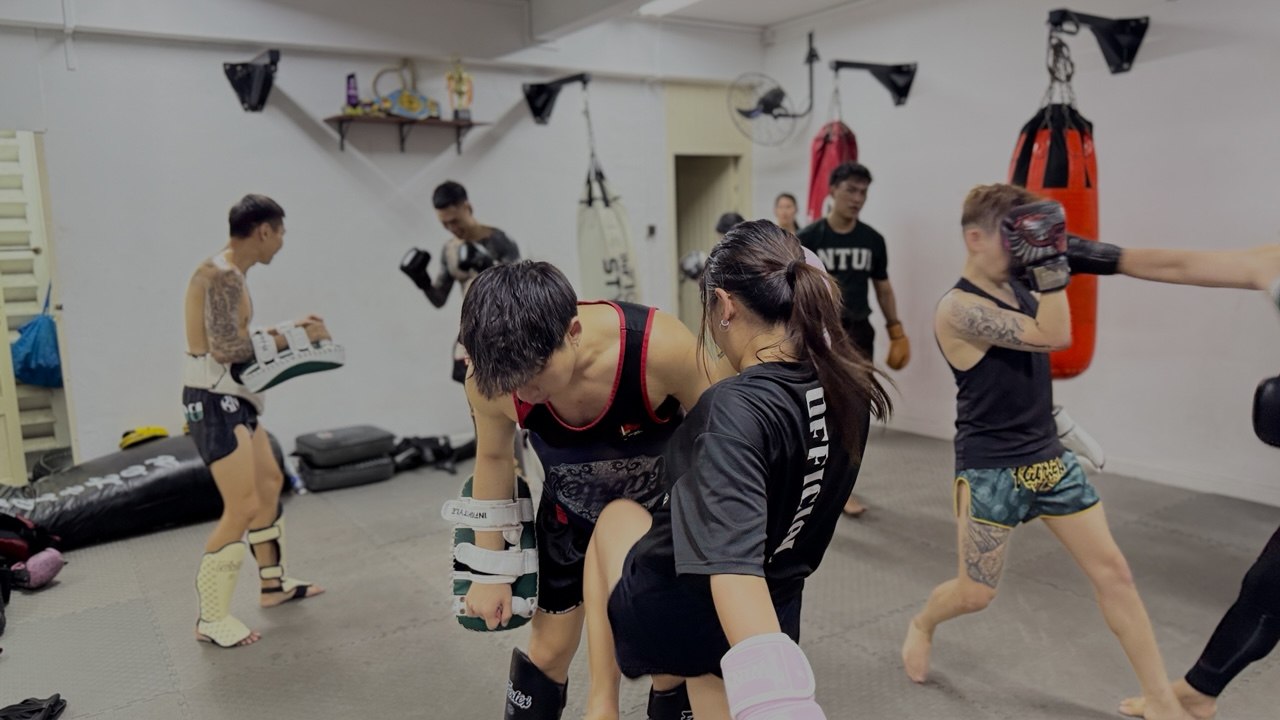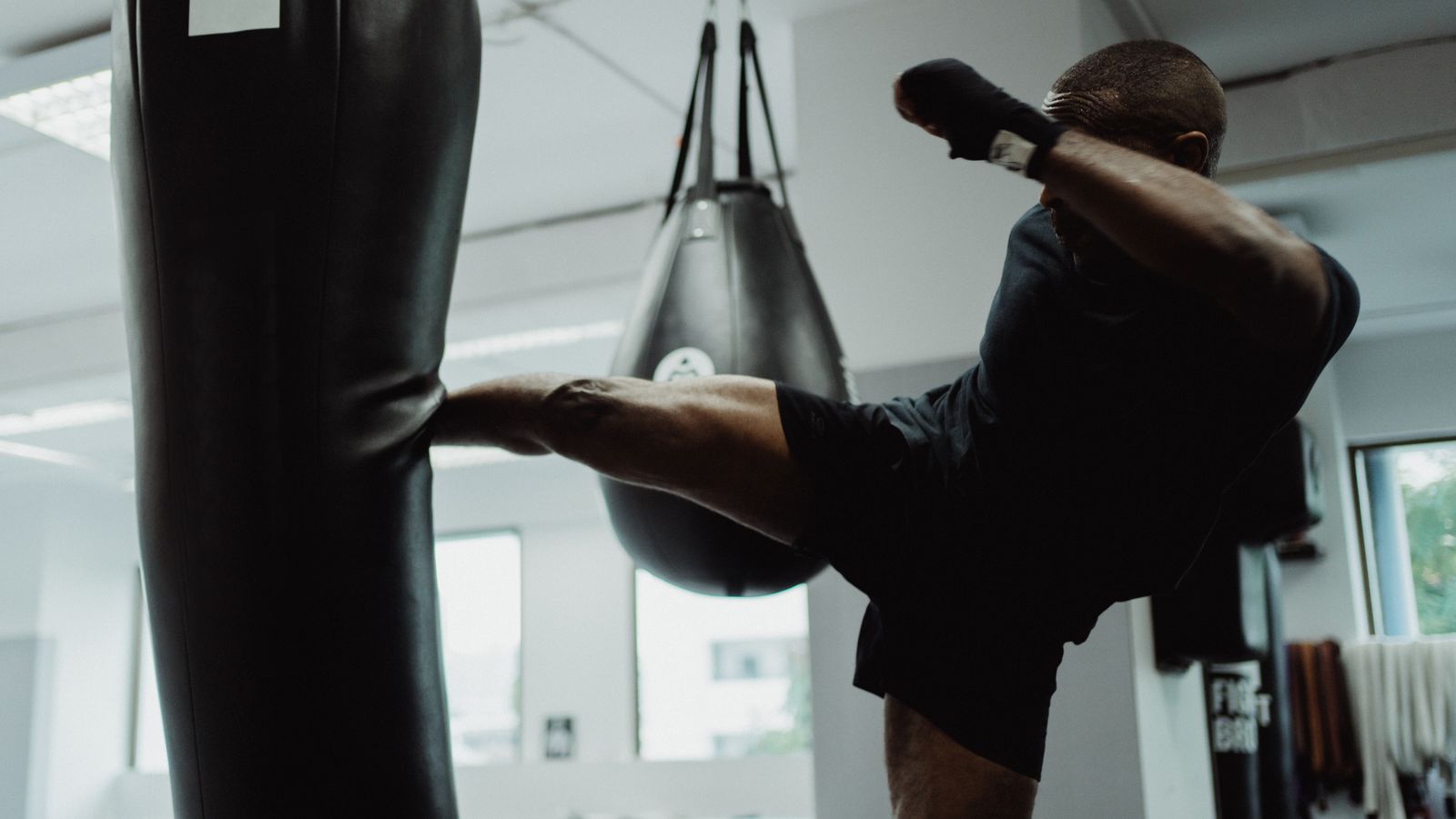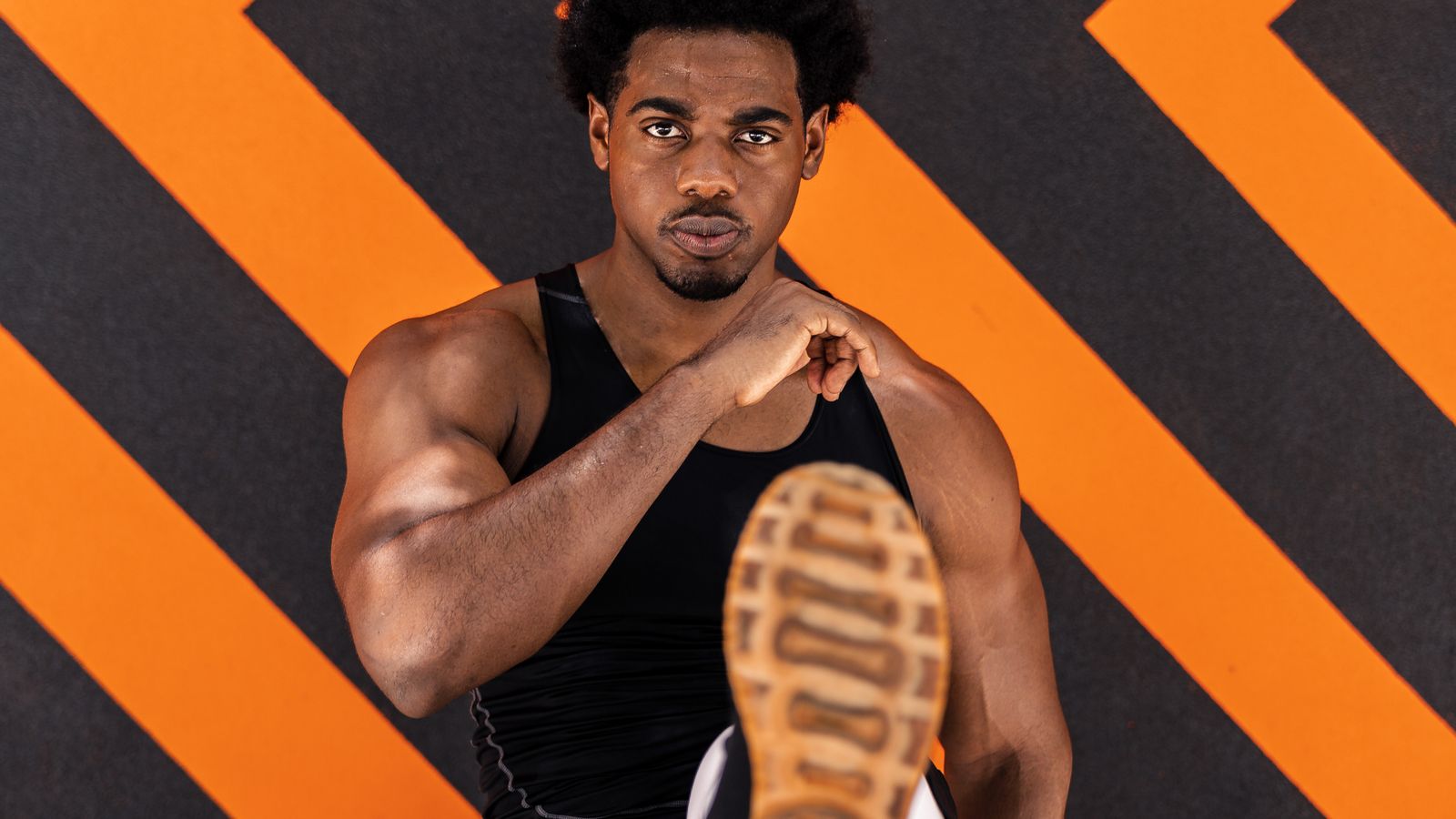
The teep is not a push kick that scores a point and buys you a breather. It is a range-control tool that stops an aggressive opponent before they get started, and if you are only using it to keep people away, you are using about a third of what it does.
This is the first in what we want to make an ongoing series of single-technique breakdowns at Khao Noi Gym. Most of what gets written about Muay Thai online covers the basics: stance, the eight limbs, how to throw a jab. Good information, but it stops at the surface. This one goes past it. If you already know how to throw a teep and want to know why yours is not working the way it should, keep reading.
What is the teep actually for
Ask most beginners what the teep does and they will say "keeps distance." True, but incomplete. The teep does three jobs, and the best Muay Thai fighters use all three without thinking about which one they are doing in the moment.
- Range control. It keeps a forward-moving opponent at the end of your leg, where they cannot land anything of their own.
- Rhythm disruption. A well-timed teep breaks an opponent's timing before they can load up a kick or combination. This is the part most people miss entirely.
- Combination setup. A teep that lands cleanly creates a predictable reaction: the opponent stumbles back, squares up, or drops their guard to recover balance. All three are openings.
Why does the teep matter more than people think
Because most fights, amateur and professional, are lost in the setup phase, not the exchange phase. An opponent who gets to walk forward on their own timing, at their own range, gets to pick the fight they want to have. A good teep takes that choice away from them.
Watch enough Muay Thai at Khao Noi Gym or on any decent stream and you will notice the fighters who control distance well tend to look calmer than everyone else in the ring. That is not because they are naturally cool under pressure. It is because the teep is doing the work of keeping chaos out of range.
The three mistakes almost everyone makes
We see the same three technical errors on the teep from students who have been training for months, sometimes years. None of them are complicated to fix. All of them quietly wreck the kick.
Telegraphing it. This is the big one. Most people drop their lead hand slightly, shift their weight back, or glance down at the target before they throw. To a trained opponent, that is a flashing sign that says "kick coming." By the time your foot leaves the ground they have already stepped offline or caught it. The fix is boring but it works: throw the teep from the exact same posture you were standing in a half-second earlier. No wind-up, no tell.
No hip drive. A teep thrown with just the leg is a shove. A teep thrown by driving the hip forward through the kick is a strike that can genuinely move someone or wind them if it lands on the body. If your teep bounces off without any real effect, the power is not coming from your knee and quad, it is supposed to come from your hip snapping into the kick. Most students who "can't teep hard" are not weak. They are kicking with the wrong muscle group.
Poor balance on the standing leg. Lean back to create extra range and you make yourself catchable. An opponent who reads a leaning teep can grab the ankle and dump you on the mat, which is one of the more embarrassing ways to lose a round. Stay upright, weight centred over the standing leg, and you keep the option to reset your stance or follow up immediately after the kick lands. Lean back and your only option after the teep is to hope it worked.
Any one of these three mistakes on its own will make the teep less effective. All three together and you have a kick that gets read, caught, or shrugged off almost every time you throw it.
How do you actually drill the teep properly
This is where a lot of gyms fall short. They teach the motion once, maybe correct your form for a class or two, then move on. Getting a teep that holds up under pressure takes a proper progression, and it is worth doing in order rather than skipping to the fun part.
Stage one: static reps on the pad or bag. Stand still, throw the teep, reset, throw it again. Boring, repetitive, and exactly what grooves the mechanic. At this stage you are not worried about timing or an opponent. You are building the motor pattern: hip first, foot flicks through, standing leg stays balanced, hands stay up. Do this until it feels automatic, not until it feels good enough. Those are different standards.
Stage two: teeping on the move. Once the static version is clean, start throwing it while stepping. Teep as you step forward into range, teep as you step back out of range. This is closer to how it actually gets used, because nobody in a real spar or fight is standing still waiting for the perfect moment. Moving changes your balance and your timing, and it will expose any part of stage one that was not actually solid.
Stage three: reactive teeping. Have a partner close distance on you, at a pace and rhythm you cannot predict in advance, and practice teeping in response. This is the stage that turns a drilled technique into a usable weapon. Reacting to a real, moving opponent is a completely different skill from performing a rehearsed sequence, and most students who feel like their teep "doesn't work in sparring" have simply skipped straight from stage one to live sparring without ever doing stage three.
Skipping steps is the single most common reason a technically decent teep falls apart the moment someone is actually coming at you.
How does the teep set up combinations
This is the part that turns the teep from a defensive habit into an offensive tool, and it is worth spending real time on once the mechanics are sound.
Teep into cross. Land a teep on an advancing opponent and their body has to absorb it before they can reset. That half-second where they are recovering their footing and balance is exactly when a straight cross lands clean, because they physically cannot get their guard back up and move at the same time.
Teep as a mid-combination reset. If you are in the middle of an exchange and get crowded, boxed into the corner, or simply run out of ideas mid-combo, a teep buys you a beat. It pushes the opponent back just enough to reset your range and your stance before you continue. Fighters who only think of the teep as an opening move miss this use entirely, and it is arguably more valuable because it works when things are not going your way.
Both of these only work if the teep itself is clean. A telegraphed, weak, off-balance teep will not create the reaction you need to follow up on. This is why the technical fundamentals matter so much before you start layering combinations on top.
Is the teep worth this much attention
For a single technique, yes. It is one of the few tools in Muay Thai that does defensive and offensive work simultaneously, it is legal and effective at every level from beginner sparring to professional fights, and it is one of the first things instructors watch for when judging whether a fighter actually understands range. A student who teeps well almost always looks more composed in sparring, because they are controlling the pace of the exchange rather than reacting to it.
It is also, honestly, one of the more neglected techniques in a lot of gyms, because it looks simple enough that coaches assume students have it after one or two lessons. They rarely do. The gap between "can throw a teep" and "teeps well" is bigger than it looks from the outside.
Start with a trial class
If you have been training at Khao Noi Gym for a while and your teep still feels flat, bring this in mind for your next class and ask a coach to watch it specifically. Most fixes are quick once someone can see what your standing leg or lead hand is doing that you cannot see yourself.
If you are new to Muay Thai in Singapore, this level of detail is exactly what training at a proper gym gets you over YouTube tutorials. A trial class at Khao Noi Gym will start you on the fundamentals, but the goal from day one is to eventually get this specific about every tool in your arsenal, not just the teep.
We are planning more of these single-technique deep dives, on the round kick, on clinch entries, and on a few other tools that deserve more than a paragraph in an overview post. If there is a technique you want broken down like this, mention it to a coach at Khao Noi Gym and it will likely end up next in the series.